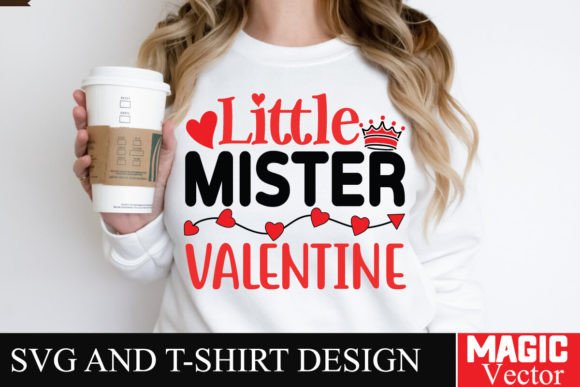
Little Mister Valentine SVG Cut File Review
As a designer who spends more time than I care to admit staring at stitch charts and fabric swatches, I don’t just buy files because they look cute on a screen. I buy them because they translate well into the real world. When Little Mister Valentine SVG Cut File landed in my inbox, I didn’t immediately think about slapping it on a t-shirt. I thought about texture, tension, and how a small business owner would actually sell this item to a customer who wants something special.
This review isn’t about the marketing copy. It’s about the practical reality of using this embroidery project in a commercial or personal setting. If you are an Etsy seller, a small shop product creator, or a hobbyist looking to elevate your handmade goods, here is my honest take on whether this design deserves a spot in your library.
The First Impression: Mood and Visual Personality
The name itself sets a specific tone. "Little Mister" implies youth, charm, and perhaps a touch of vintage sweetness. From a design perspective, this suggests a layout that is likely compact but impactful. In the crowded market of T-Shirt Designs and Graphics, generic hearts and Cupid arrows are everywhere. What we need is character.
Visually, the file promises a layered approach. The inclusion of both an SVG and an EPS file indicates that this is designed for versatility. For embroidery, this often means the design can be adapted for different techniques. Is it purely a machine embroidery design meant for dense fill stitches? Or does it have clean lines suitable for an applique design? The layered nature of the SVG suggests that if you were to use this for cutting vinyl or fussy cutting fabric for applique, the separation of elements is logical. This matters because it affects how much work goes into preparing the garment before the needle even touches the fabric.
Real-World Application: Where Does This Fit?
I put myself in the shoes of a buyer. Who buys a "Little Mister" themed item? Usually, it’s for a baby shower, a first birthday, or a Valentine’s Day gift for a young child. This immediately narrows our focus away from standard adult apparel and toward niche markets where emotional value drives sales.
Imagine preparing a custom embroidered tote bag for a boutique. A simple, bold graphic works best there. However, imagine instead a soft cotton onesie or a burp cloth. The Little Mister Valentine SVG Cut File feels like it belongs in the nursery category. It has the potential to create a high-end handmade product feel when stitched correctly.
Consider the scenario of creating a set of matching family outfits for a holiday photo shoot. The father wears a sweatshirt with a matching "Daddy" design, and the toddler wears the "Little Mister" piece. The cohesion comes from the style of the graphic. If the lines are too thin or the details too intricate, the connection breaks down at a distance. But if the design relies on strong shapes and clear negative space, it reads perfectly as a coordinated set. This is the kind of strategic thinking that turns a single sale into a bundle purchase.
Technical Performance in Embroidery
When we talk about an embroidery file, we are talking about translation. A vector looks perfect on a monitor; thread behaves differently. Here is how this design likely performs in critical areas:
- Stitch Density: Designs aimed at children’s wear often risk being too dense, which can make fabric stiff and uncomfortable. A good design asset balances coverage with breathability. If this file uses heavy fill stitch areas, it might be better suited for structured items like caps or patches rather than delicate baby clothes.
- Satin Stitch Quality: Outlines and borders rely on satin stitches. If the curves in the "Little Mister" text or graphical elements are sharp, they need enough stitches to lay flat without puckering. Curved text can be tricky; if the angle changes too abruptly, the thread can break or look jagged.
- Running Stitch Accents: If the design includes fine details like buttons, eyes, or decorative stitching, these will likely be executed as running stitches. These are fragile. On a tote bag design that sees heavy use, fine running stitches might fray faster than the main body of the embroidery.
This is why testing is non-negotiable. You must check the stitch density against the fabric type. A stabilizer choice can make or break the final look, especially if the design has large open spaces that need support.
Where to Use Carefully
No design is universal. There are specific scenarios where Little Mister Valentine SVG Cut File might struggle:
- Small Hoop Sizes: If the design exceeds 4x4 inches, it requires a larger hoop. Attempting to downscale it too much can result in lost detail, particularly in any lettering or tiny graphical accents.
- Textured Fabrics: Trying to embroider this on a heavily textured fabric like boucle or thick chenille can obscure the design. The needle may hit bumps, causing skipped stitches or uneven tension.
- Stretchy Knits: While common for baby clothes, stretchy fabrics require careful hooping and stabilizers. Without proper support, the embroidery project can distort, making the "Little Mister" text look warped.
- Dense Stitch Areas on Thin Fabric: If you place a dense section on a thin tea towel or lightweight jersey, the back of the embroidery might show through, or the fabric may pucker excessively after washing.
Affecting Brand Value and Customer Trust
In the world of craft business and online selling, presentation is everything. A poorly digitized design screams "amateur." A well-executed one builds trust. When a customer receives a personalized gift with crisp edges, consistent thread colors, and no loose ends, they perceive higher value.
This design, by virtue of its theme, appeals to emotion. But it is the execution that validates the price point. If you are selling this as a commercial embroidery item, ensure that the contrast between the thread and the fabric is high. Dark threads on dark fabric, or light threads on light fabric, will kill the visual appeal regardless of how good the vector file is.
Furthermore, consider the longevity of the product. A finished product that survives multiple washes without fading or distorting encourages repeat customers. This is why inspecting the design for potential weak points—like long jump stitches or unsupported corners—is part of your professional responsibility.
Practical Designer Notes Before You Start
Before you load this into your machine or send it to production, follow these steps to ensure success:
- Test on Scrap: Always run a test stitch-out on the actual fabric you plan to use. This reveals issues with tension, thread breakage, or stabilizer needs.
- Check Contrast: View the design in black and white mockups. Does the shape hold up without color? This ensures the silhouette is strong.
- Verify Licensing: Since you are receiving a zip file with SVG and EPS formats, confirm the license terms. Can you sell finished items? Can you sell digital mockups? Clarity here protects your creative entrepreneur business.
- Inspect Small Details: Zoom in on the vector. Are there tiny elements that won't stitch well? Sometimes, what looks like a nice detail on screen becomes a tangled mess in thread.
- Compare Backgrounds: Test the design on both light and dark backgrounds. A design that pops on white might disappear on navy blue.
Ultimately, Little Mister Valentine SVG Cut File offers a charming foundation for a variety of projects. It fits naturally into the holiday embroidery and baby embroidery niches. By approaching it with a critical eye toward technical execution and material compatibility, you can transform a simple digital file into a treasured handmade product that stands out in a competitive market.